
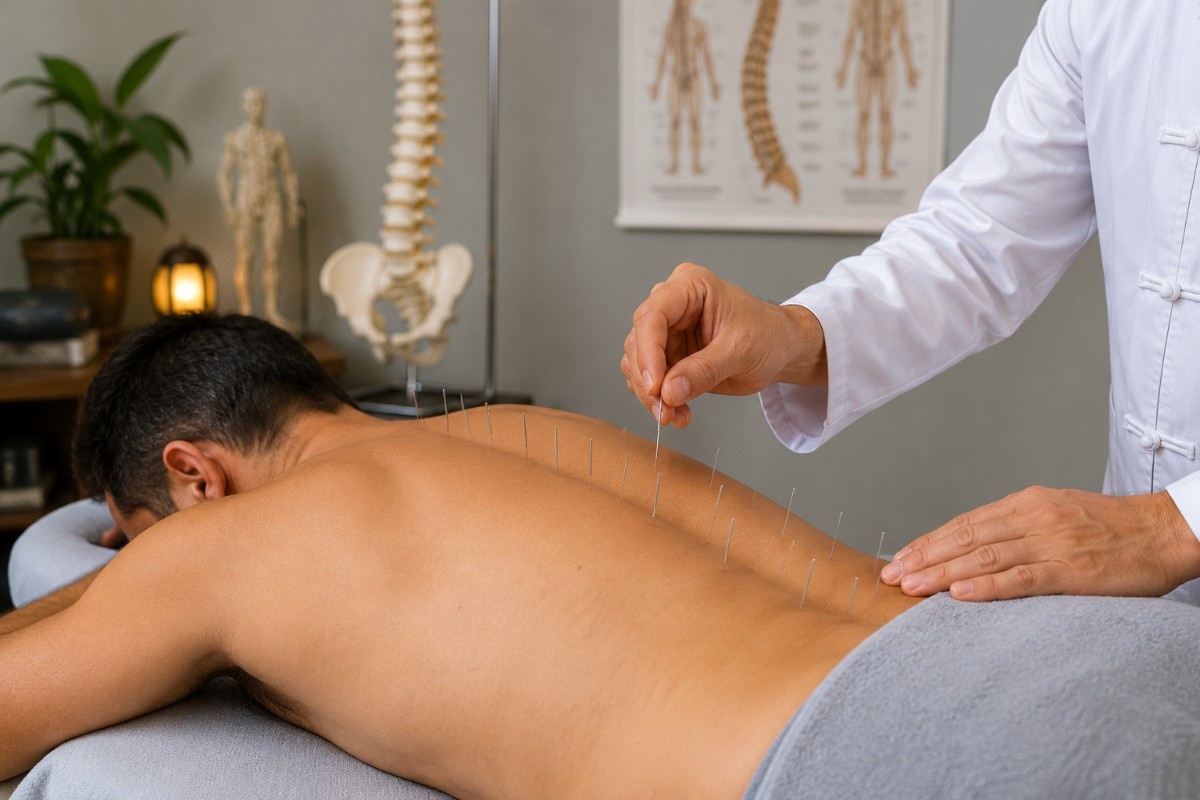
Acupuncture Therapy
What is Acupuncture Therapy?
Acupuncture is a traditional healing therapy in which very thin, sterile needles are inserted into specific points (acupoints) on the body. It originated in China over 2,000 years ago and is now practiced worldwide as a complementary therapy.
In traditional practice, acupuncture aims to balance the flow of Qi (vital energy) through pathways called meridians. From a modern medical perspective, acupuncture may stimulate nerves, muscles, connective tissue, and the release of natural pain-relieving chemicals such as endorphins.
Common Benefits
- Pain relief (neck, back, shoulder, knee, arthritis)
- Migraine and headache management
- Stress and anxiety reduction
- Improved sleep
- Relief of nausea and vomiting
- Support for rehabilitation after injury
- Improved muscle function and circulation
Types of Acupuncture Therapy
1. Traditional Chinese Acupuncture (TCM)
- Based on meridians and Qi.
- Uses body acupoints to restore balance.
- Most widely practiced form.
2. Medical Acupuncture
- Performed by trained healthcare professionals.
- Based on modern anatomy and neurophysiology.
- Commonly used for pain management and rehabilitation.
3. Electroacupuncture
- A small electrical current is applied between acupuncture needles.
- Often used for chronic pain, muscle weakness, and nerve disorders.
4. Auricular Acupuncture (Ear Acupuncture)
- Uses points on the ear that correspond to different body parts.
- Commonly used for pain, stress, insomnia, and addiction support.
5. Scalp Acupuncture
- Needles are inserted into specific areas of the scalp.
- Often used alongside rehabilitation for neurological conditions.
6. Hand Acupuncture
- Focuses on acupuncture points located on the hands.
- Popular in Korean acupuncture systems.
7. Abdominal Acupuncture
- Uses points on the abdomen.
- Often selected for chronic pain and internal disorders.
8. Distal Acupuncture
- Treats a painful area by inserting needles at distant points (for example, treating shoulder pain using points on the hand or leg).
9. Dry Needling
- Targets muscular trigger points.
- Based on modern musculoskeletal medicine rather than traditional meridian theory.
- Commonly used by physiotherapists for muscle pain and tightness.
10. Cosmetic Acupuncture
- Aims to improve skin appearance by stimulating circulation and collagen production.
- Used as a complementary cosmetic treatment.
11. Sujok Acupuncture
How Su Jok Acupuncture Works
The human hand and foot are considered "micro-systems" of the whole body. When an organ or body part is affected, its corresponding point on the hand or foot may become sensitive.
A trained Su Jok practitioner:
- Identifies the affected correspondence points.
- Stimulates these points using sterile, disposable acupuncture needles.
- May combine treatment with seeds, magnets, moxibustion, color therapy, or acupressure.
- Encourages the body's natural self-healing processes.
-
The treatment is generally comfortable and minimally invasive.
Common Conditions Treated
- Chronic back pain
- Neck pain
- Knee osteoarthritis
- Tennis elbow
- Sciatica
- Frozen shoulder
- Migraine and tension headaches
- Stress and anxiety
- Insomnia
- Post-operative nausea
Safety
- Should always be performed with single-use, sterile needles.
- Minor bruising or soreness may occur.
- Avoid treatment over infected skin or open wounds.
- People with bleeding disorders or those taking blood-thinning medication should consult their healthcare provider first.
- Acupuncture should be performed by a qualified, licensed practitioner.

Digital Stethoscope
Lorem ipsum dolor sit amet, consectetur adipisicing elit. Dignissimos repellendus repudiandae incidunt quidem pariatur expedita, quo quis modi tempore non.

We want to give you 10% discount for your first order,
Use
discount code at checkout


We want to give you 10% discount for your first order,
Use
discount code at checkout